From Middle Schoolto Marriage
An intimate Riviera Maya celebration where Maya tradition, Japanese-inspired floral art, tropical ingredients and deeply personal details came together.
Some weddings start with a Pinterest board.
This one started in middle school.
I have known Irma since we were kids, which made designing her wedding to Hiram feel completely different from any other celebration I have worked on. There is something surreal about growing up with someone and, years later, being trusted to create the space where she marries the person she loves.
For me, this wedding could never be just beautiful. It had to feel like them.
Every choice — from the ceremony setting to the shape of the dinner table, the flowers, the fruit, the fabrics, the music, and even the presence of their dogs in the design — was meant to tell a small part of their story. And that is exactly what wedding design should do.
A ceremony
rooted in place.
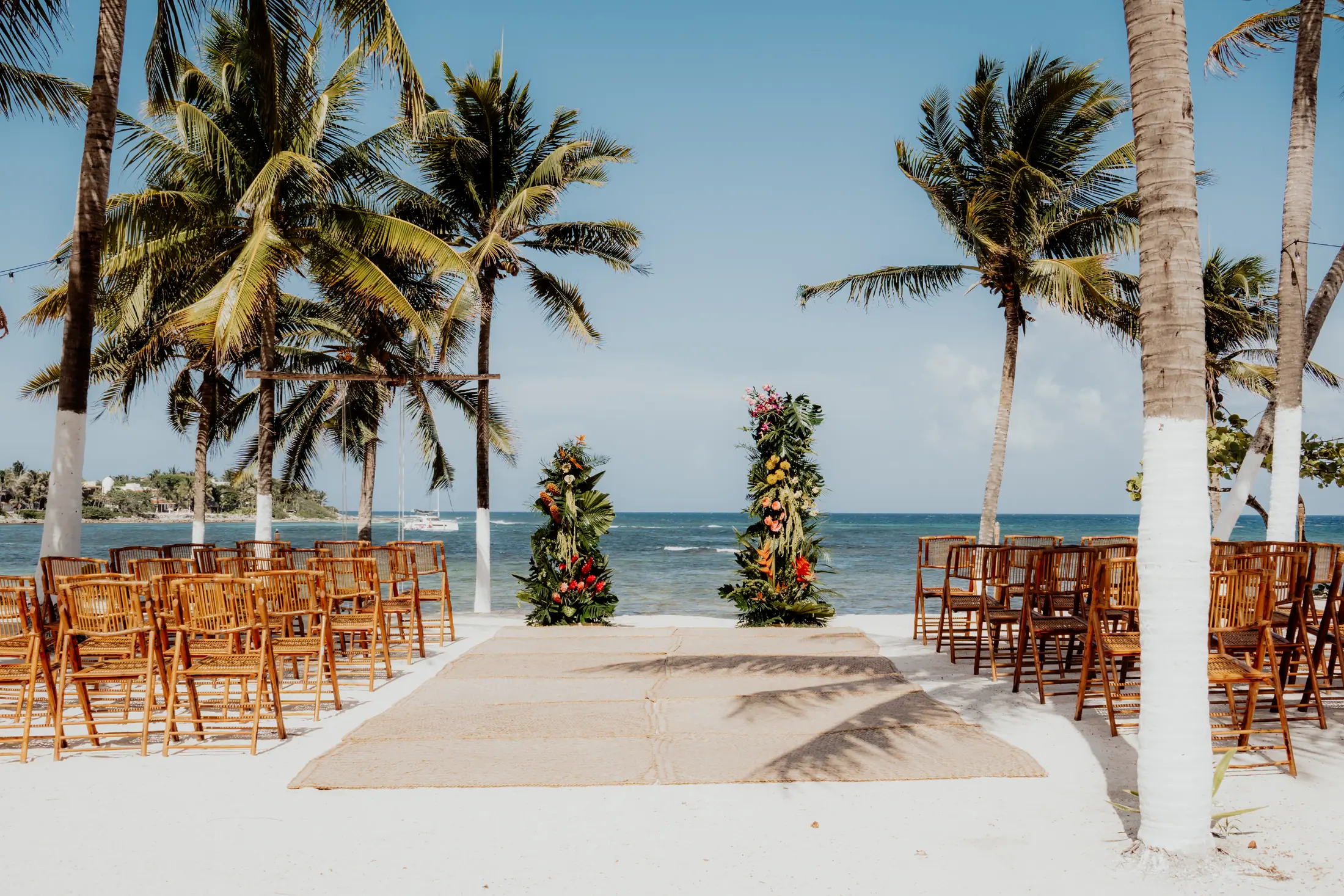
The celebration began by the Caribbean Sea, beneath palm trees and surrounded by the natural landscape of the Riviera Maya. Rather than competing with the setting, we wanted the ceremony design to feel as if it belonged there.
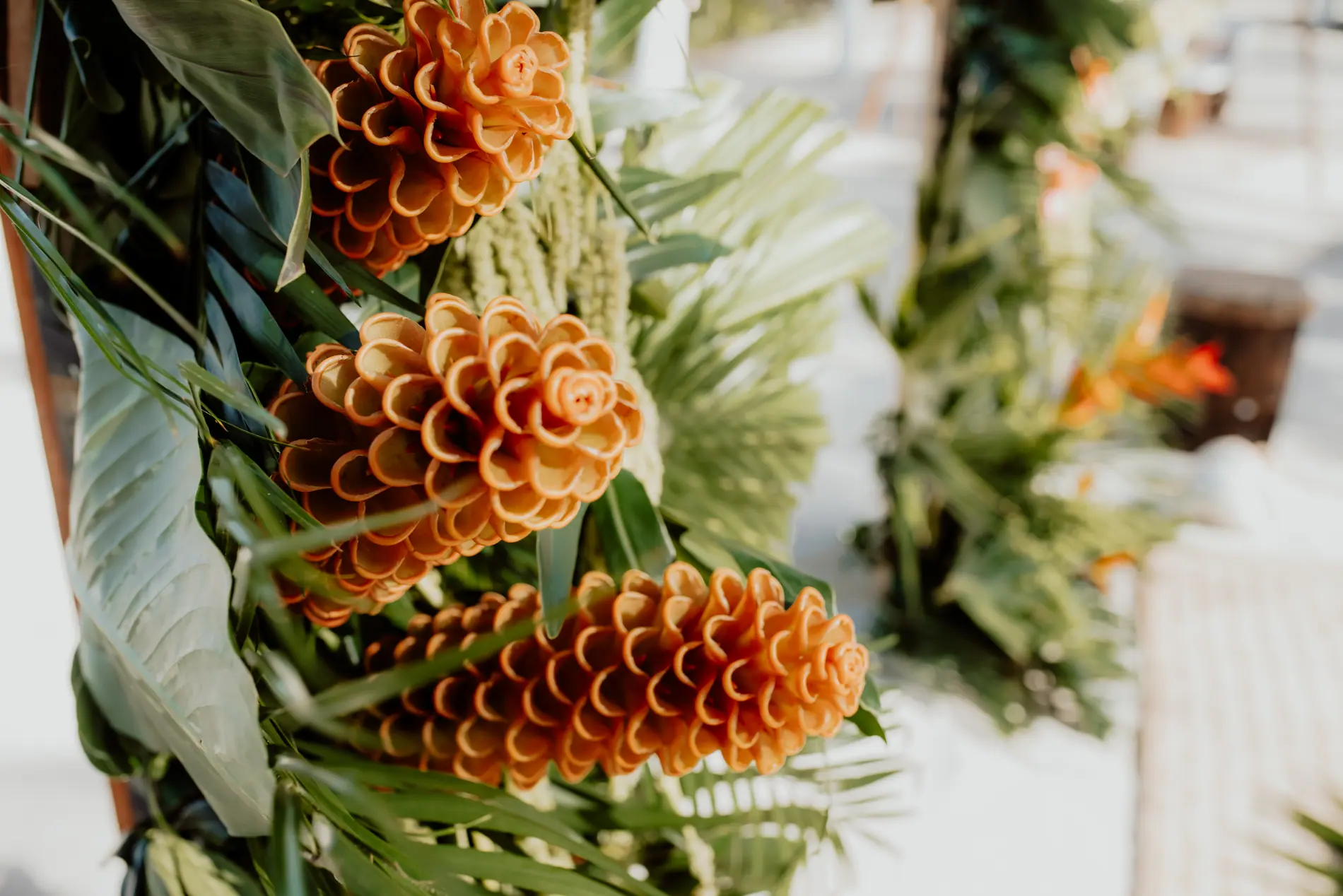
Two sculptural floral installations framed the ocean using tropical foliage, unexpected textures and saturated touches of colour. Woven rugs softened the aisle while warm wooden chairs connected the design back to the natural environment.
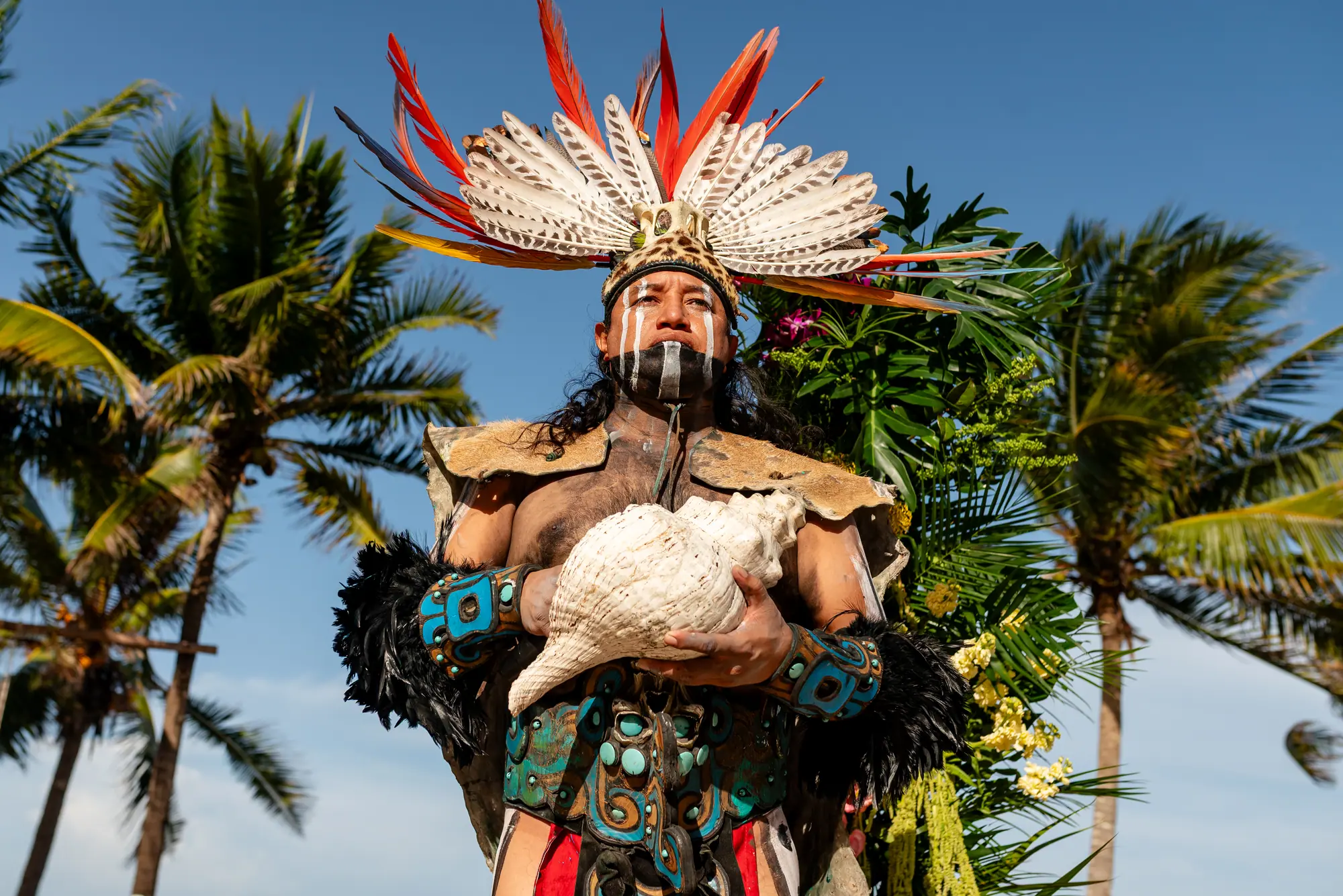
The ceremony itself incorporated Maya traditions, giving the day a deeper connection to the place where Irma and Hiram chose to marry.
One of the strongest moments of the day came during the Maya ceremony, with the conch shell, the palms, the tropical florals and the Caribbean Sea surrounding them.
It was powerful, grounded and completely different from a ceremony that could have happened anywhere else in the world. This one belonged here.
Japan, Ikebana
and designing with intention.
Irma and Hiram share a deep love for Japan, so I knew I wanted that part of their relationship represented in the wedding. But I did not want it to become a theme.
No literal Japanese décor. No obvious references simply for the sake of saying, “Look, they love Japan.”
Instead, I became inspired by Ikebana, the Japanese art of floral arrangement. Ikebana is built around intention, movement, composition and the relationship between materials and negative space. Rather than filling every available surface with flowers, each element is allowed to exist and communicate.
That philosophy became one of the foundations of the reception design.
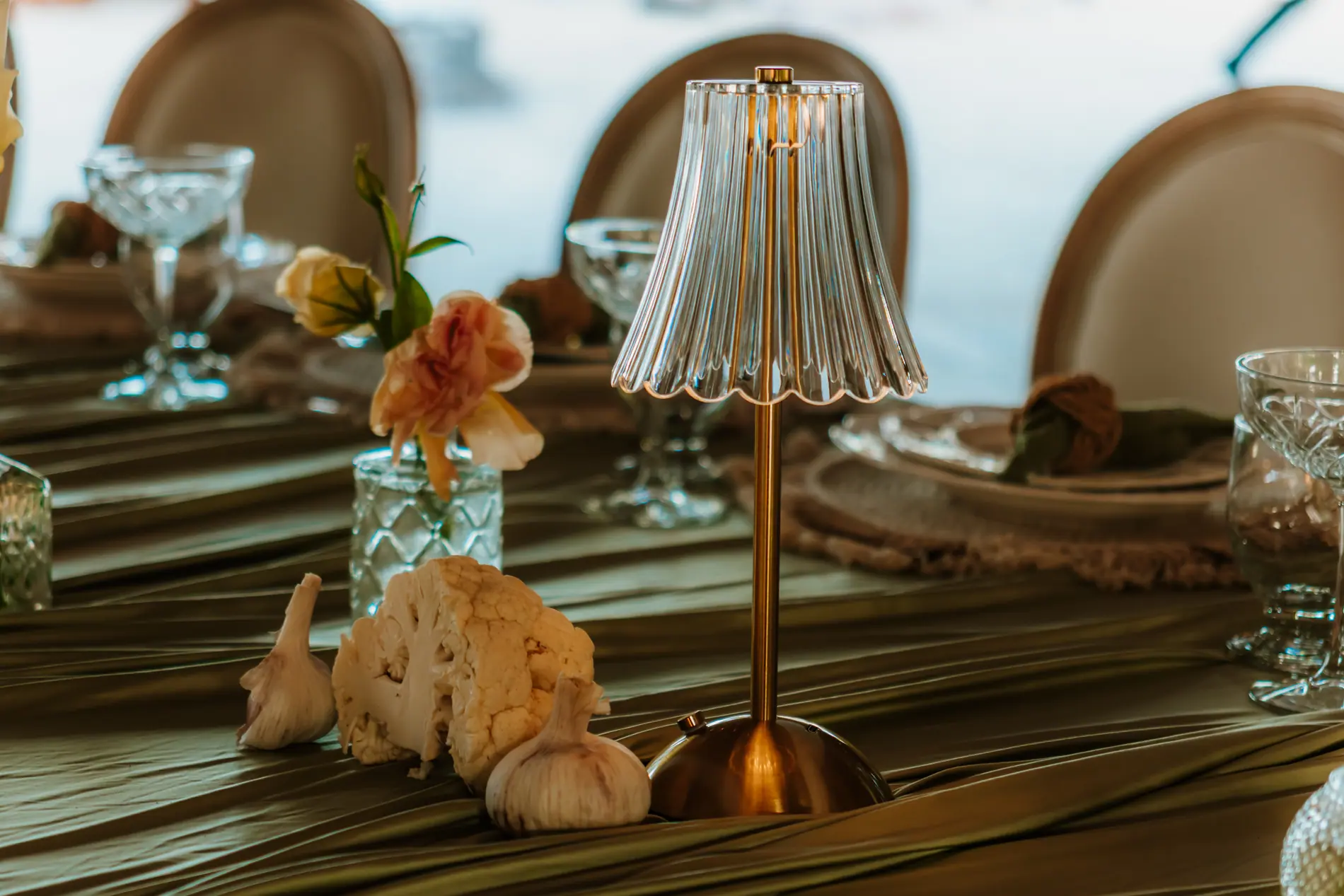
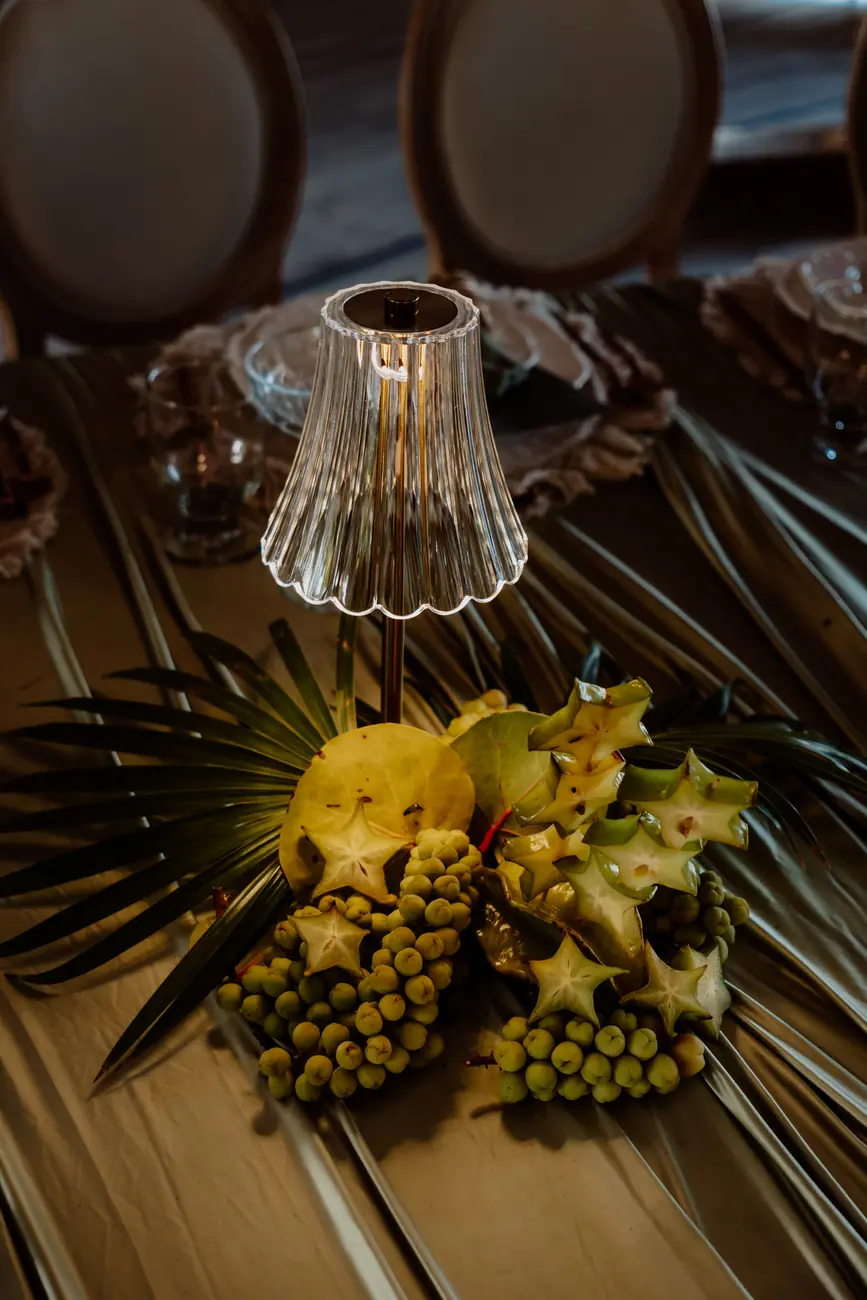
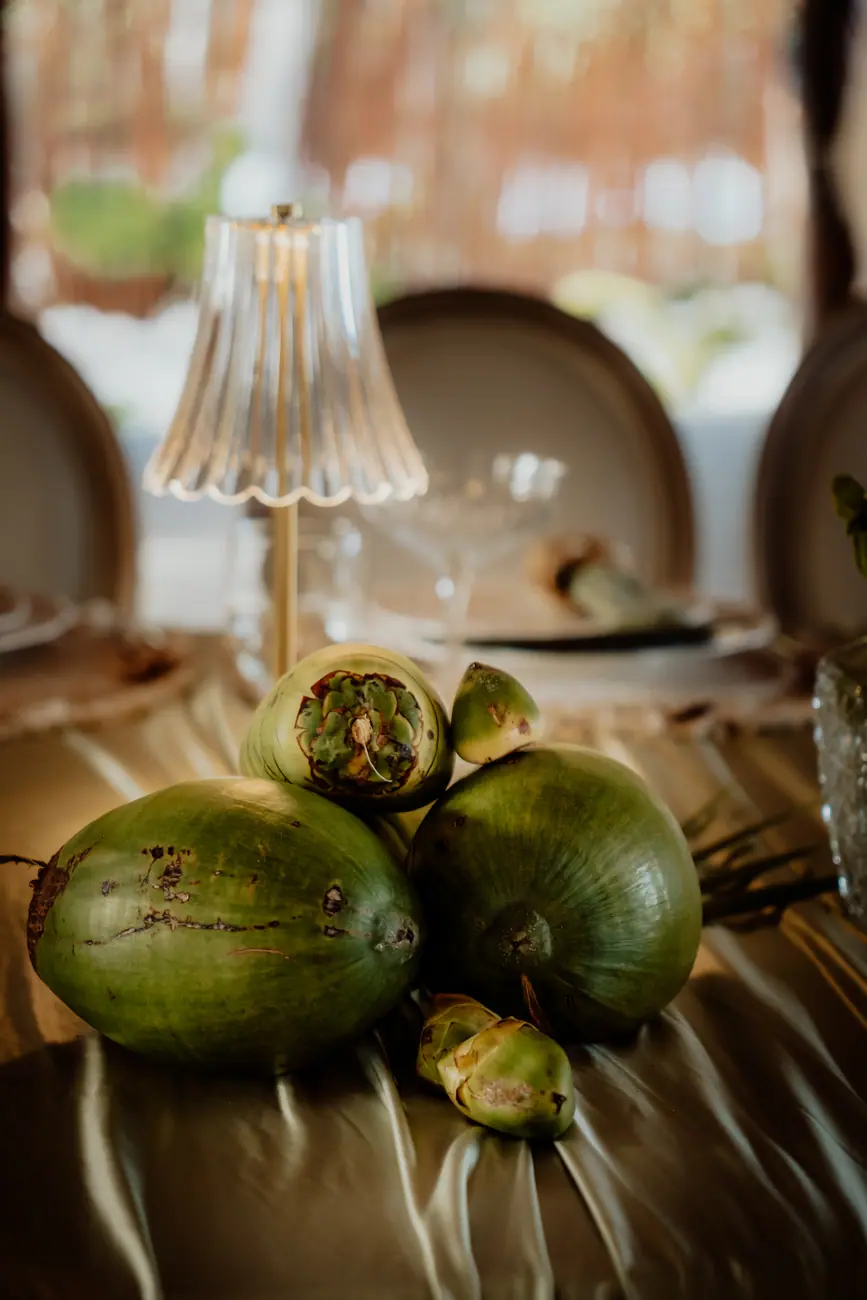
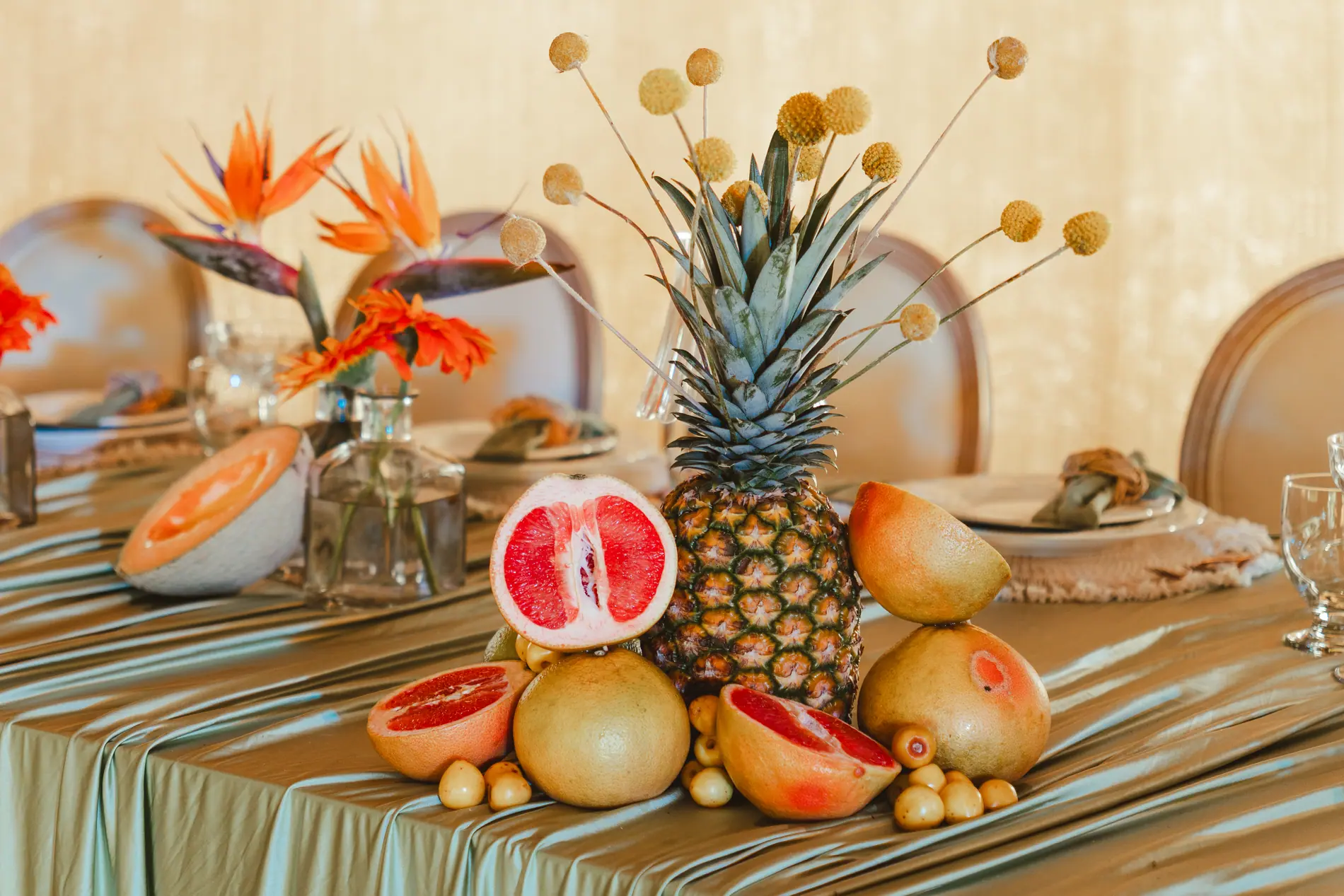
I translated it through individual stems, tropical fruits, vegetables, sculptural forms and asymmetrical compositions that moved across the table almost like little still-life installations.
For me personally, those elements also became a way to express what I wished for my friend in this new chapter: abundance, sweetness, growth and a life full of colour. Those were my wishes, not a meaning carried by Ikebana itself — what Ikebana gave the design was its way of thinking.
So yes, there were grapefruits, dragon fruit, coconuts, radishes, cauliflower and even garlic on a wedding table. And somehow… it worked. Very well.
Because when design has intention, unexpected things stop feeling random. They begin to feel inevitable.
Fruit, flowers
and a different definition of romance.
Romance does not always need to mean blush roses and candlelight. For Irma and Hiram, I wanted romance to feel alive.
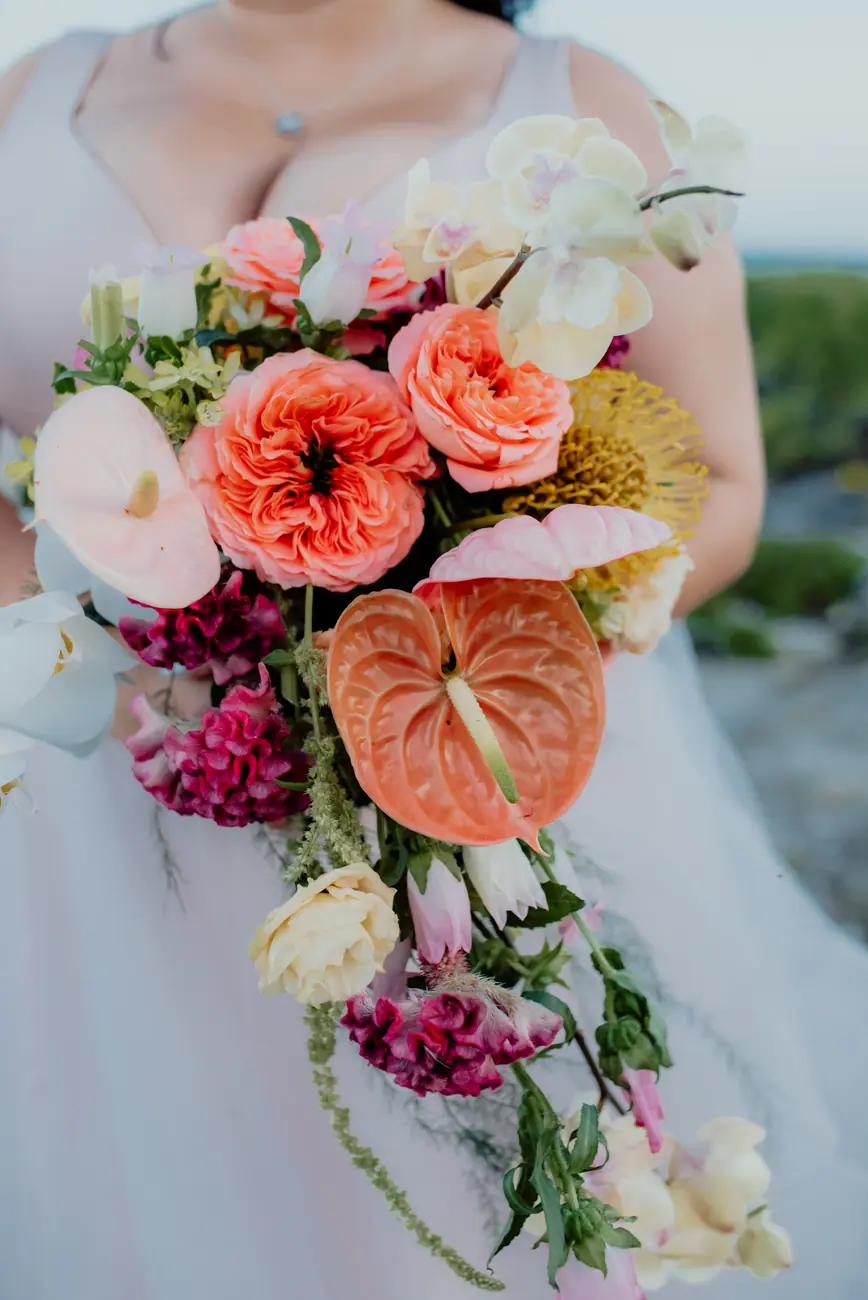
We used tropical flowers, orchids, anthuriums, birds of paradise and bold organic shapes alongside fruit and produce. The bouquet reflected the same direction: cascading, textural and full of unexpected forms.
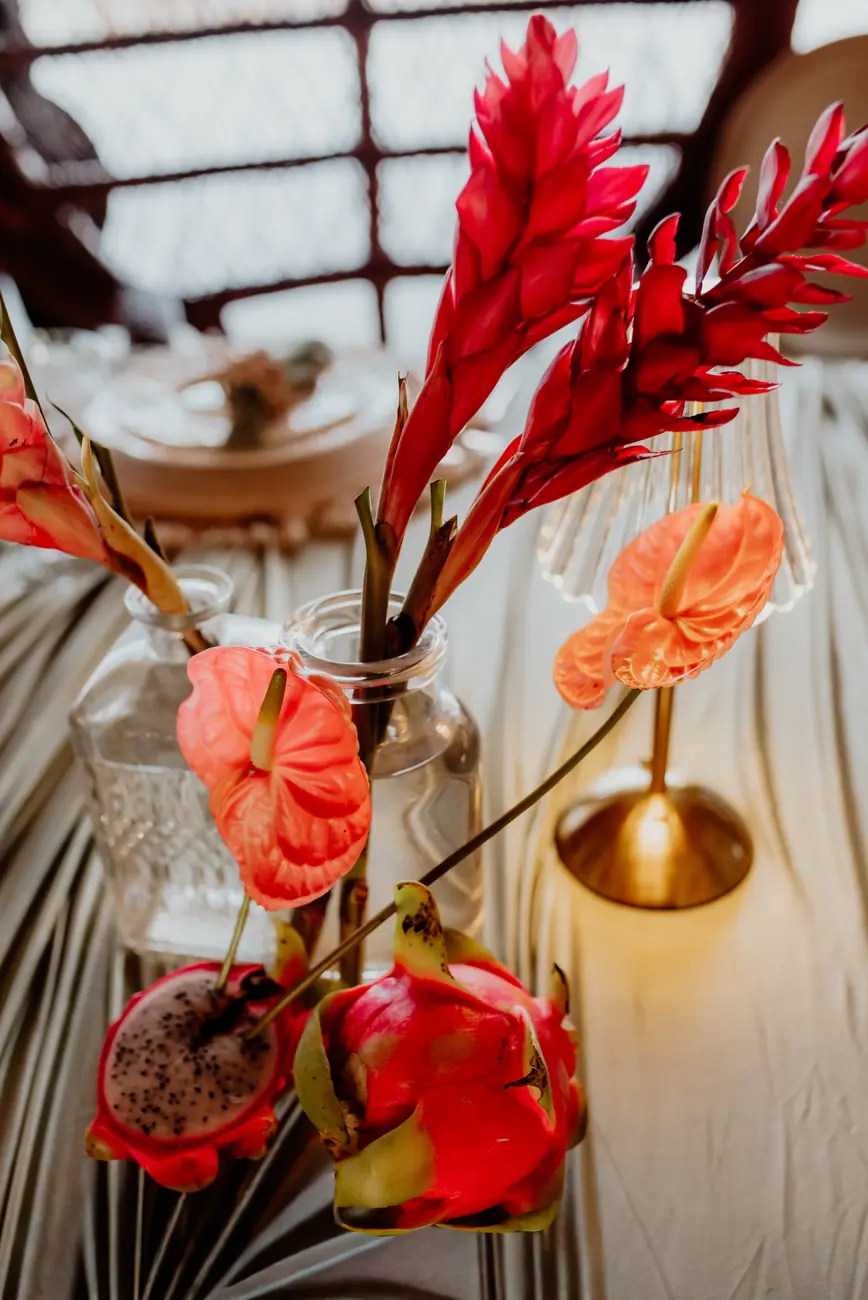
Meanwhile, the reception tables alternated softer floral moments with more sculptural compositions.
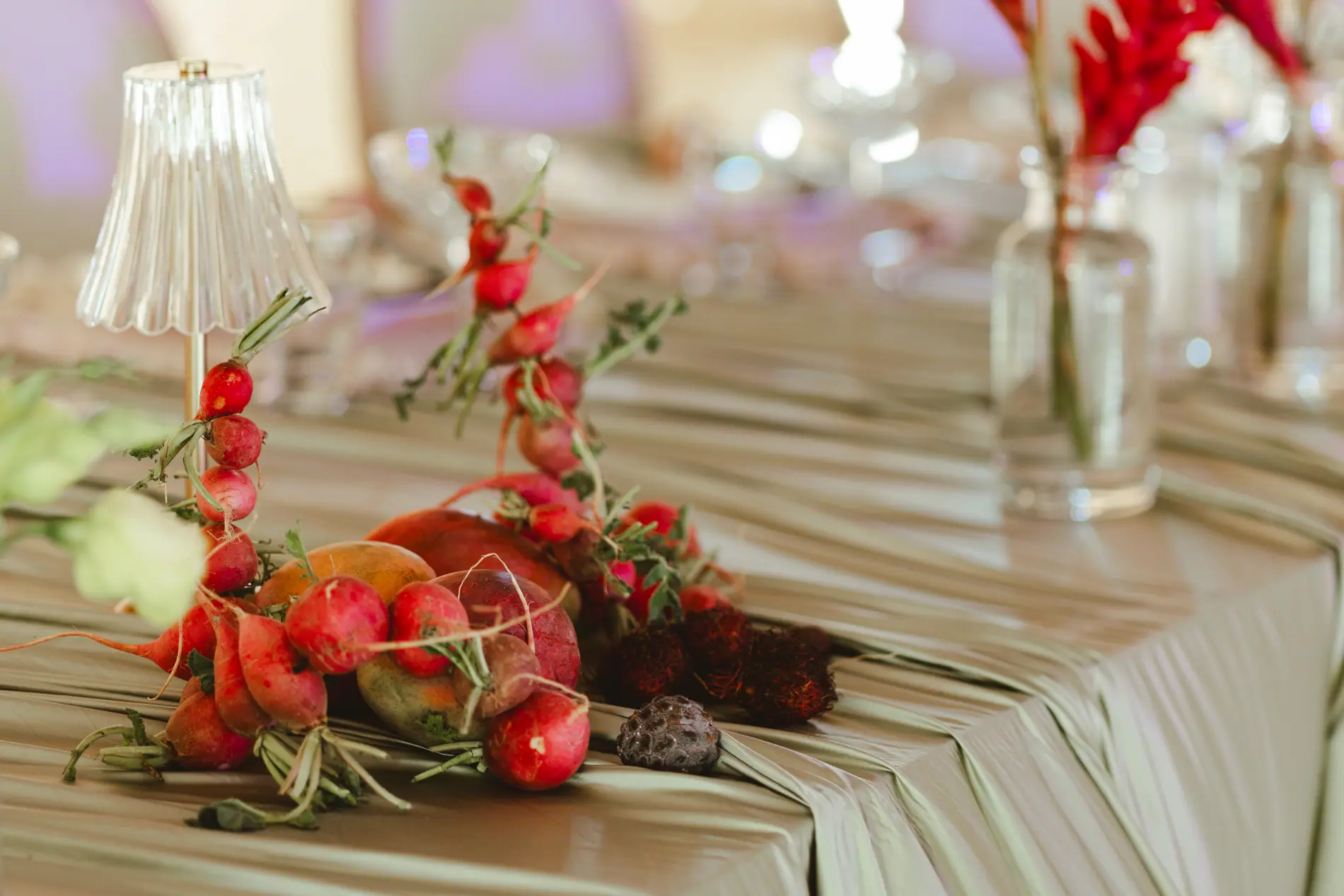
A pineapple became a centrepiece. Radishes became part of the tablescape. Green fruit sat beside tiny lamps.
The result was playful, but still sophisticated. It felt tropical without falling into the obvious version of a “tropical wedding.” And that distinction mattered to me.
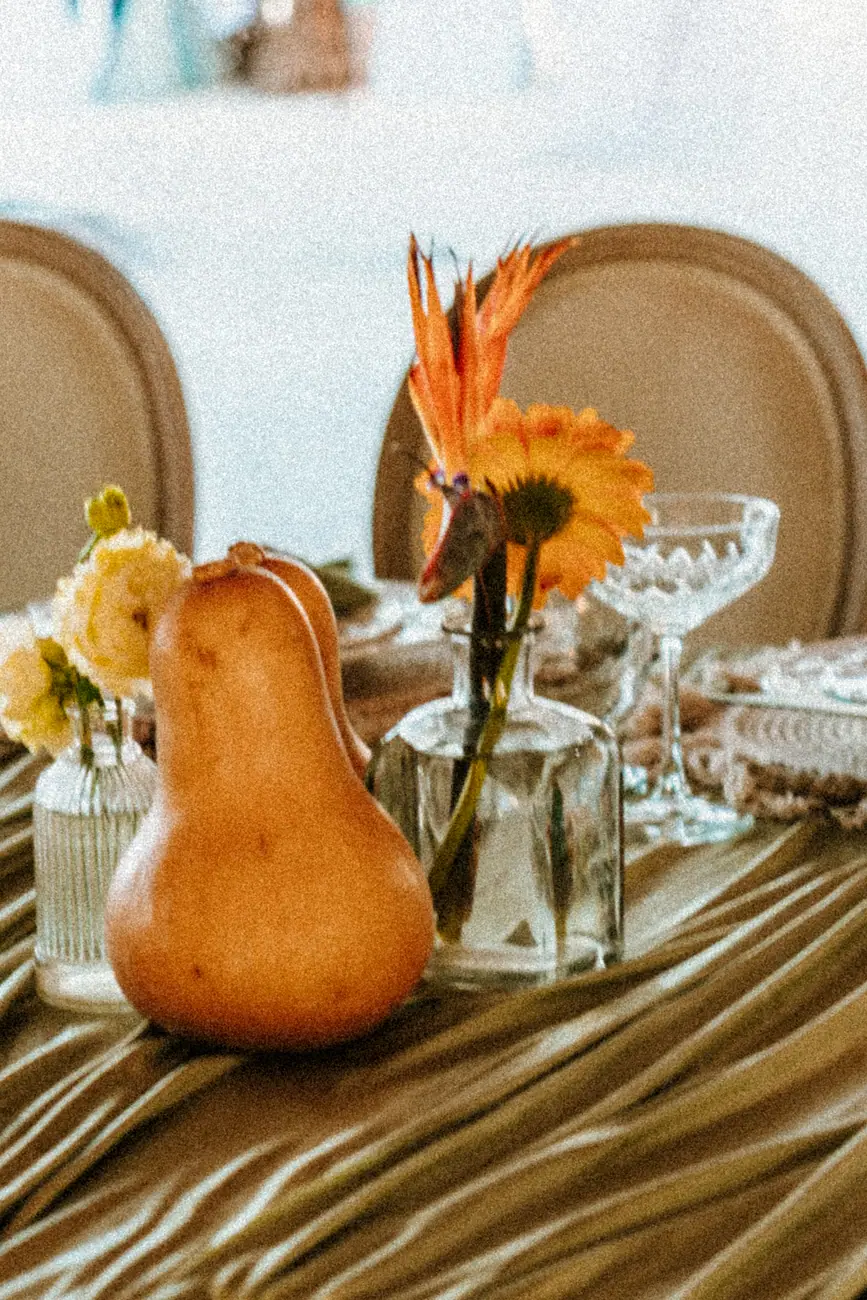 Single stems and produce in glass
Each composition was built to be read on its own — a pear, two stems, a shadow — and then to belong to the line of the table as a whole.
Nothing repeated exactly. Nothing was symmetrical. The eye kept moving.
Trends,
but never just for the trend.
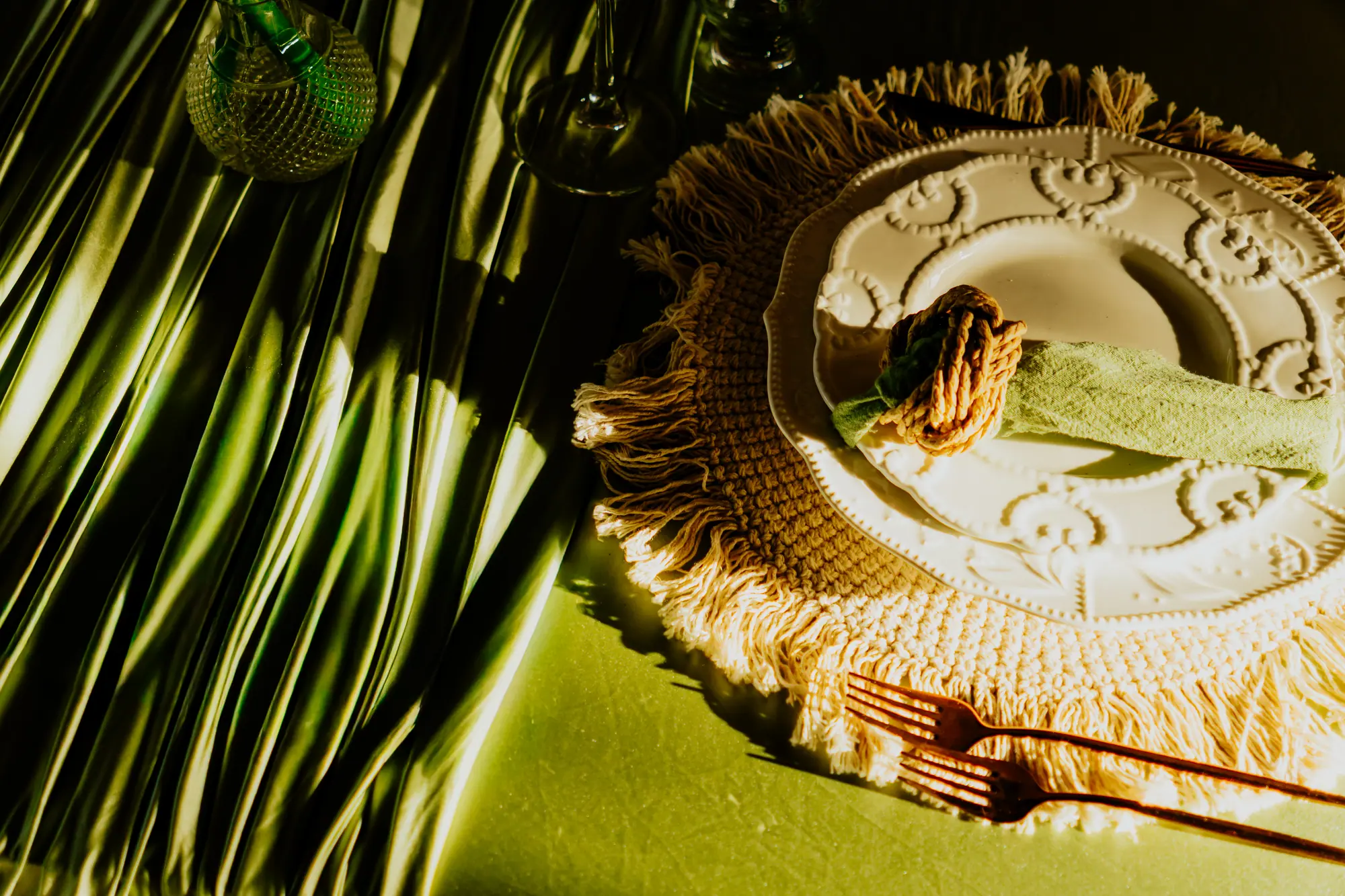
One contemporary element I really wanted to incorporate was overcloth draping. Instead of using a traditional perfectly pressed linen, we intentionally layered and gathered olive-toned fabric across the tables.
The folds created movement, shadow and texture — almost like another organic material within the design.
The fabric became the landscape where everything else lived: flowers, fruit, glassware, tiny lamps, vintage-inspired plates, woven placemats and copper flatware.
The slightly imperfect draping kept the table from feeling too polished or too formal.
This is one of my favourite things about trends. They are useful when they help tell the story. They become boring when they are the story.
“A trend should support the couple’s personality, never replace it.”
Making an intimate
wedding feel full.
One of the biggest design questions with intimate weddings is how to make a large venue feel intentional without trying to fill every corner with more décor.
Our solution was not more. It was geometry.
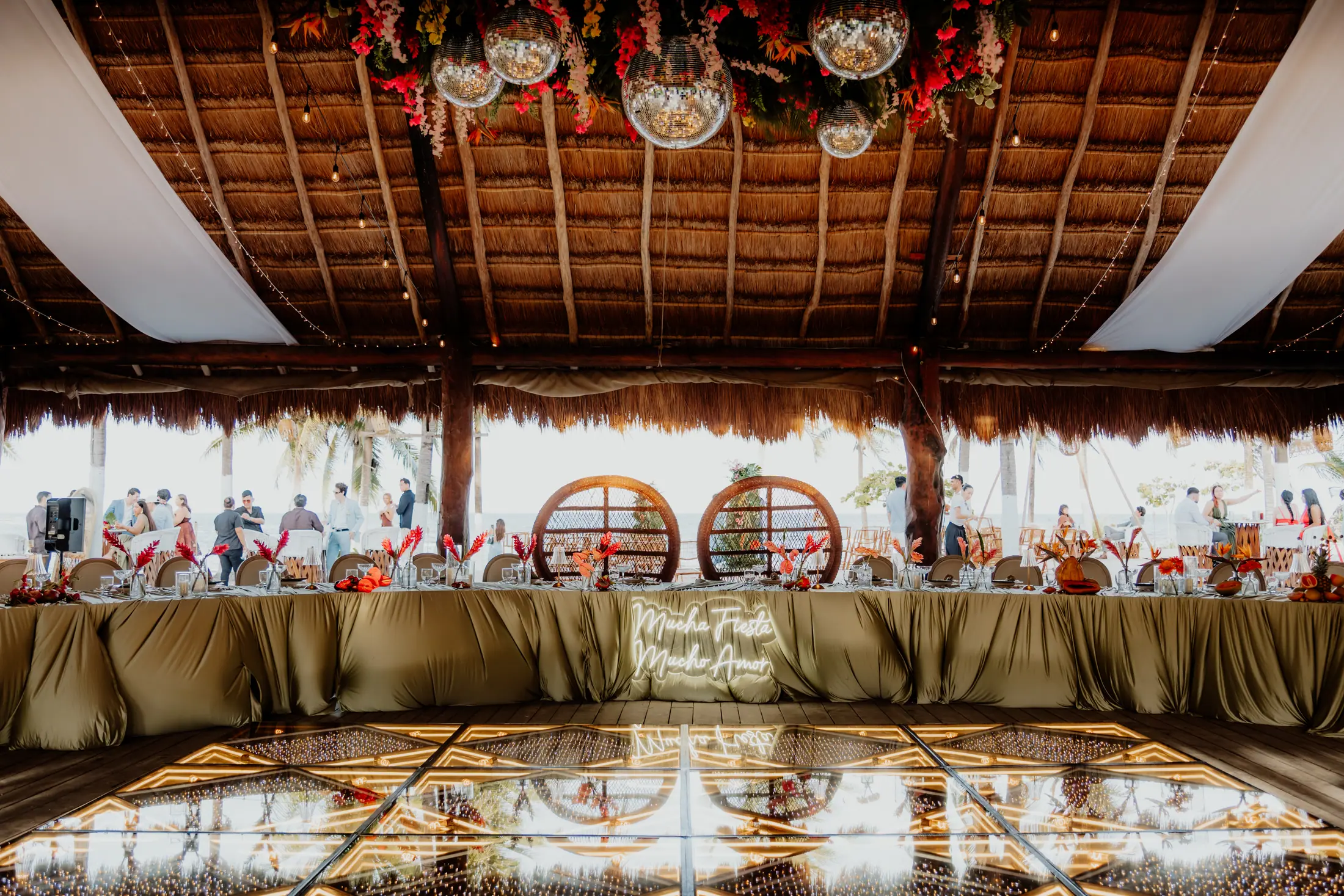
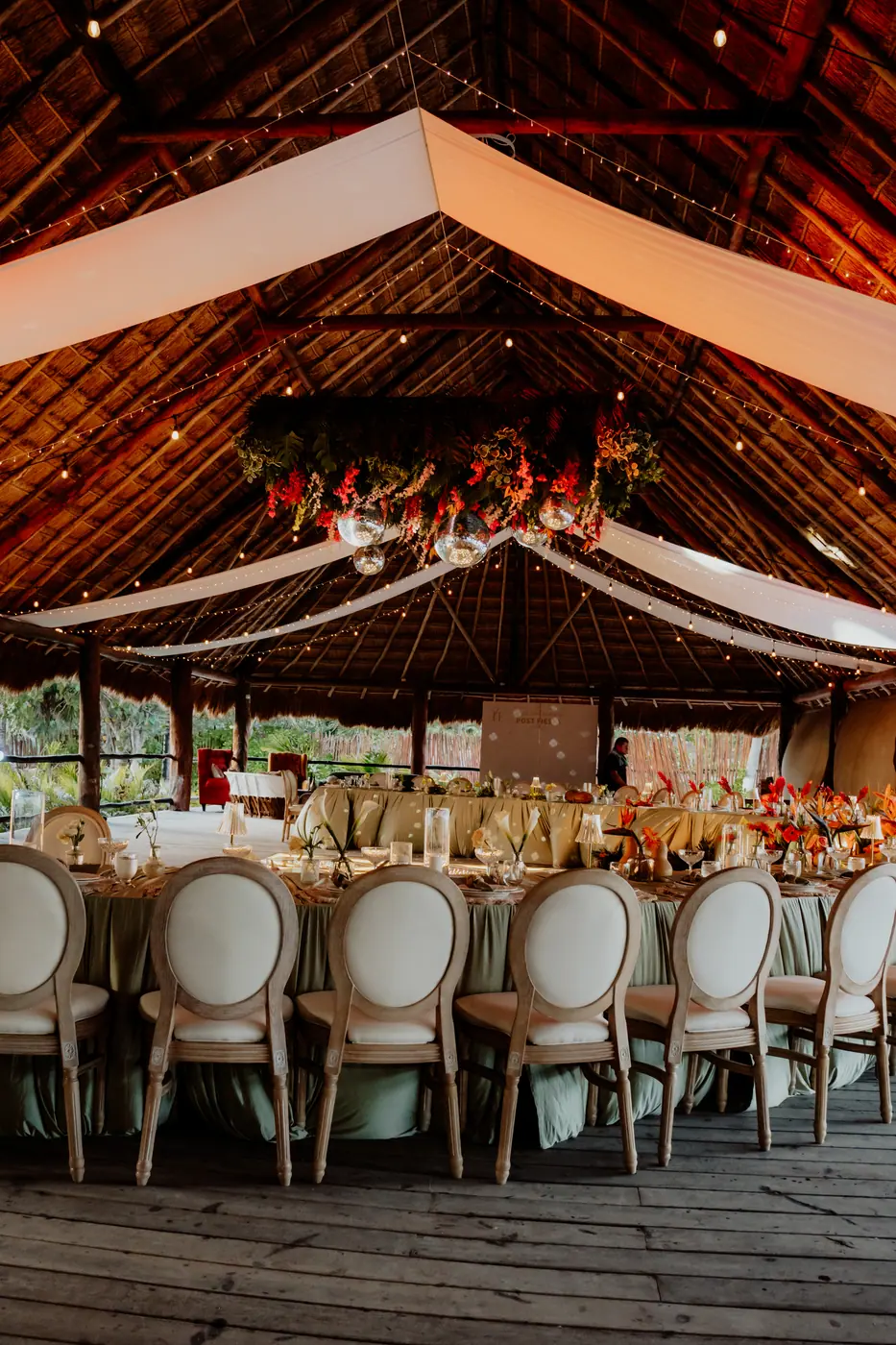
Instead of separating everyone into several small tables, we created one large imperial dining table arranged in a semi-circle. The shape allowed everyone to see one another.
No one was hidden at another table. No one felt like they were sitting in a separate group. Dinner became one shared conversation.
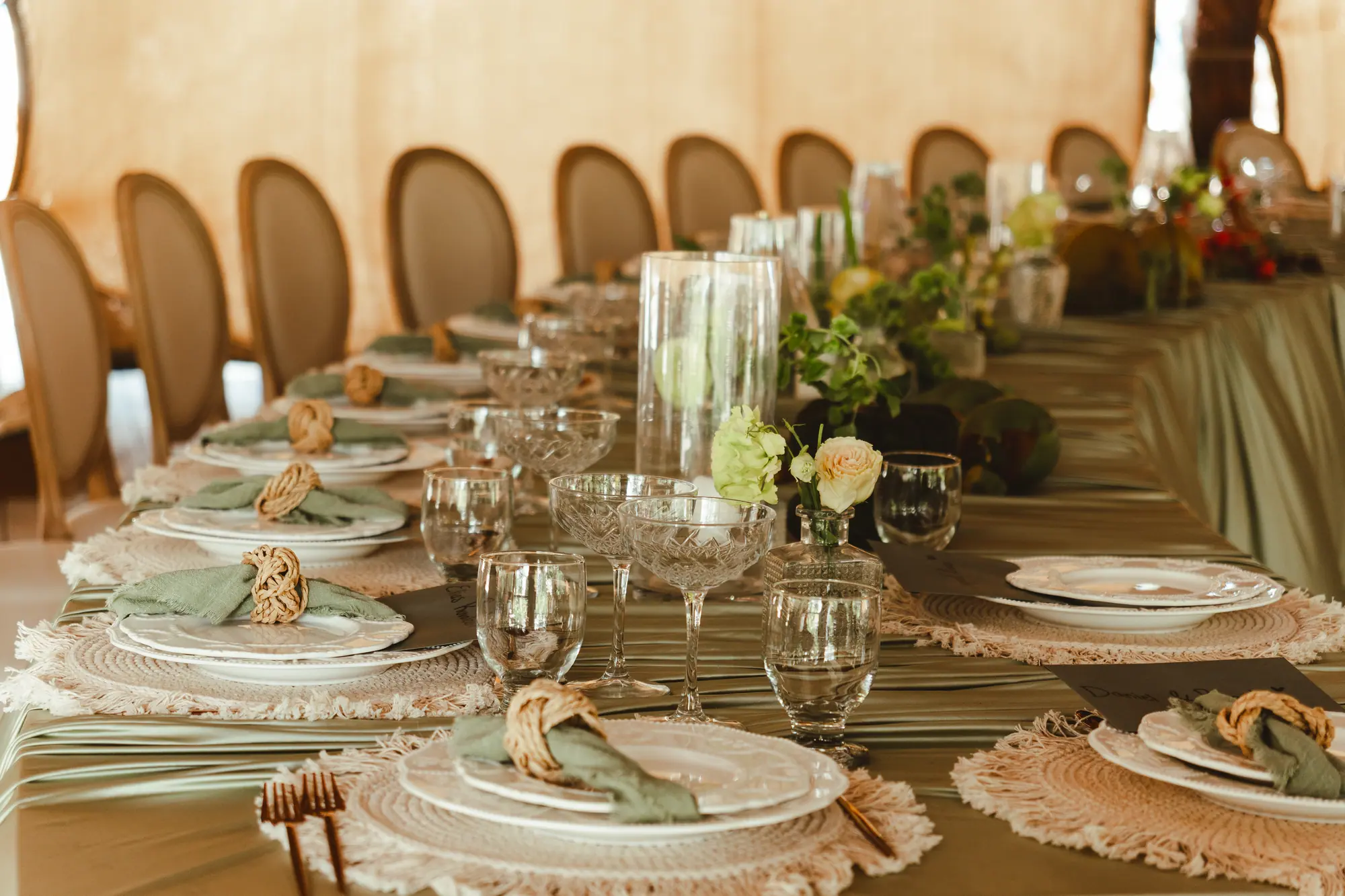
The semi-circle also helped us visually fill the palapa without overcrowding it. The table itself became the architecture of the reception.
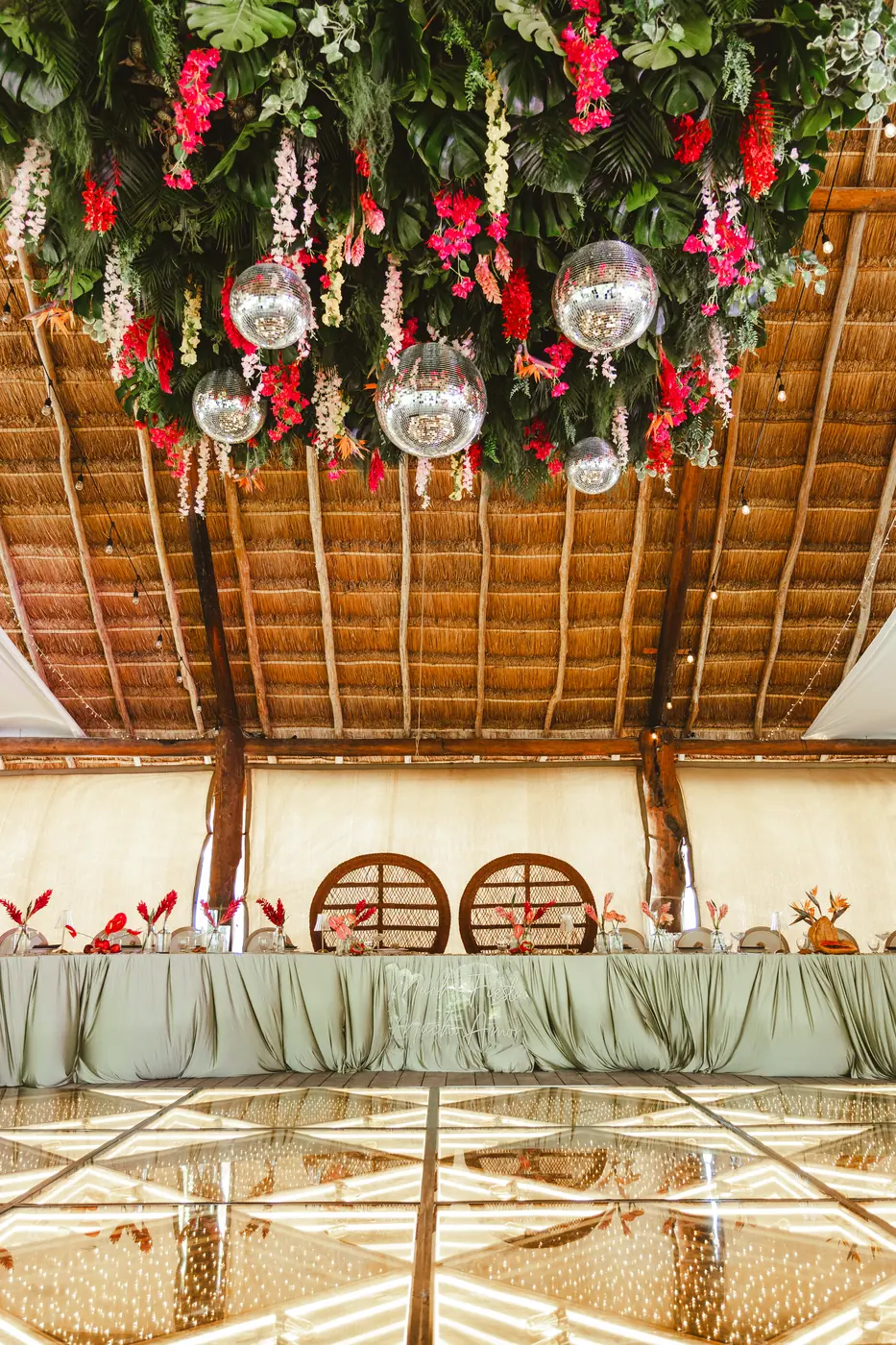
Above it, floral installations and disco balls created another layer of dimension while the reflective dance floor multiplied the light and colour throughout the space.
And then, right in the centre: Mucha Fiesta, Mucho Amor.
Honestly, that could have been the entire wedding philosophy.
A dinner
that sounded like them.
There was another detail guests could not photograph, but I remember it just as clearly. During dinner, music from Spirited Away played in the background.
And that tiny decision said more about Irma and Hiram than a generic romantic playlist ever could.
It was subtle. Some guests probably recognised it immediately. Others may not have known where the music came from at all. But that did not matter. It belonged to the couple.
That is what personalisation really means to me. Not adding someone’s initials to everything. Not printing their names twenty-seven times.
It is creating moments where the people who know them best think: of course they chose this.
Even their dogs
had a place in the story.
Irma and Hiram’s dogs are not simply pets. They are family. Their babies. So naturally, they also became part of the wedding story.
Those kinds of personal references are some of my favourite details to design because they may mean nothing to another couple — but everything to this one.
That is what makes a wedding memorable. Not because every guest understands every reference. But because every reference belongs.

Details that were
never just details.
Even the smaller styling moments carried the same visual language.
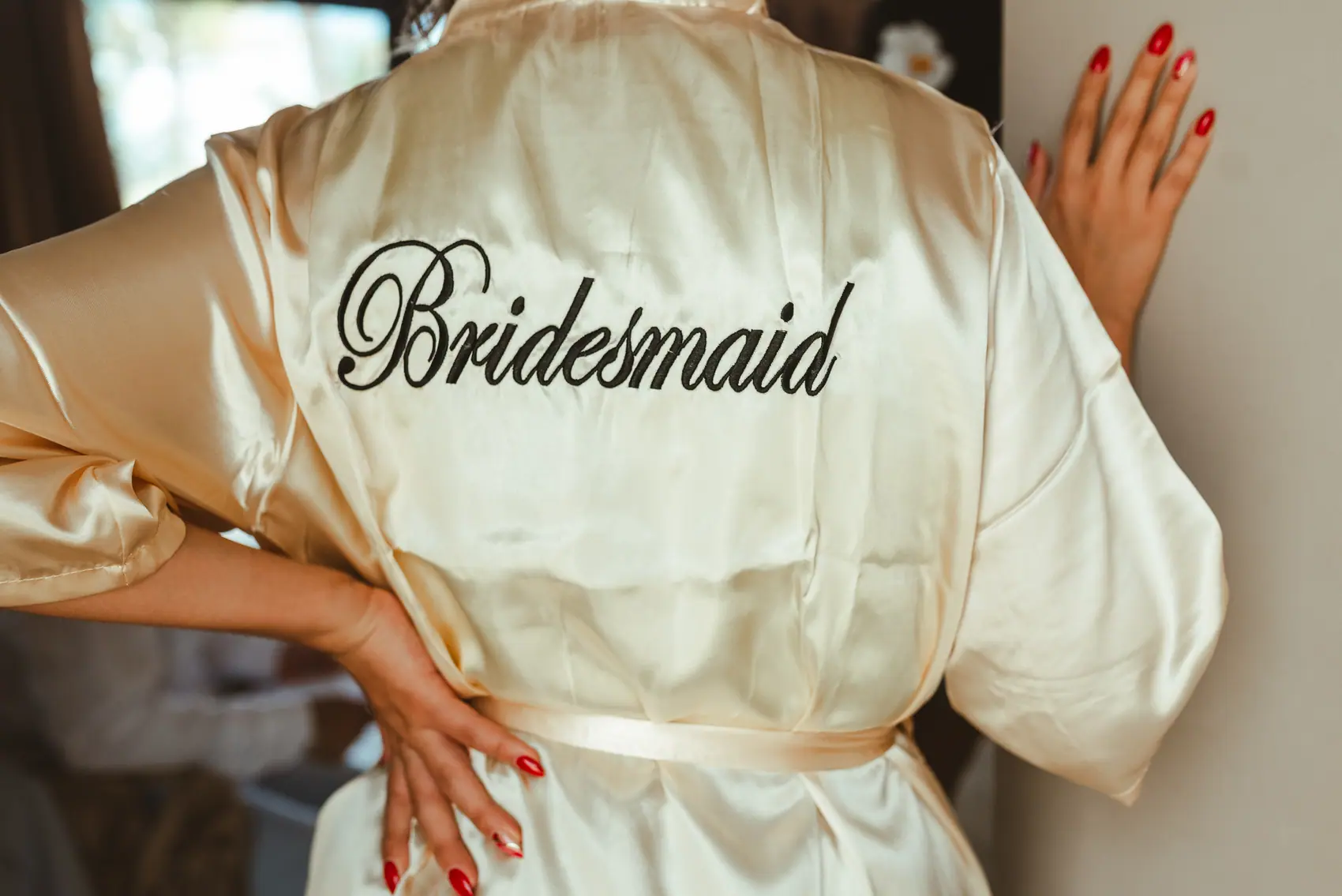
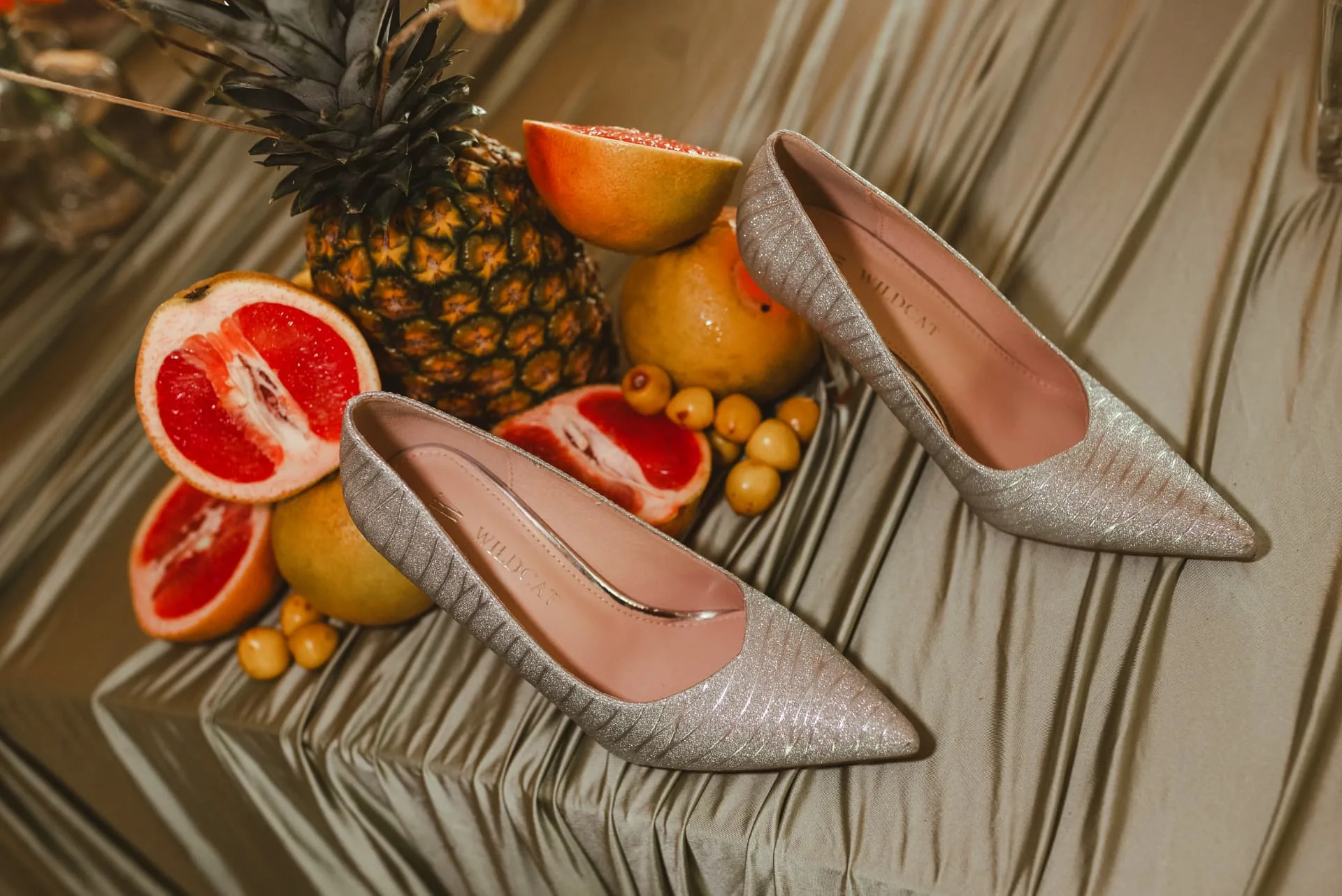
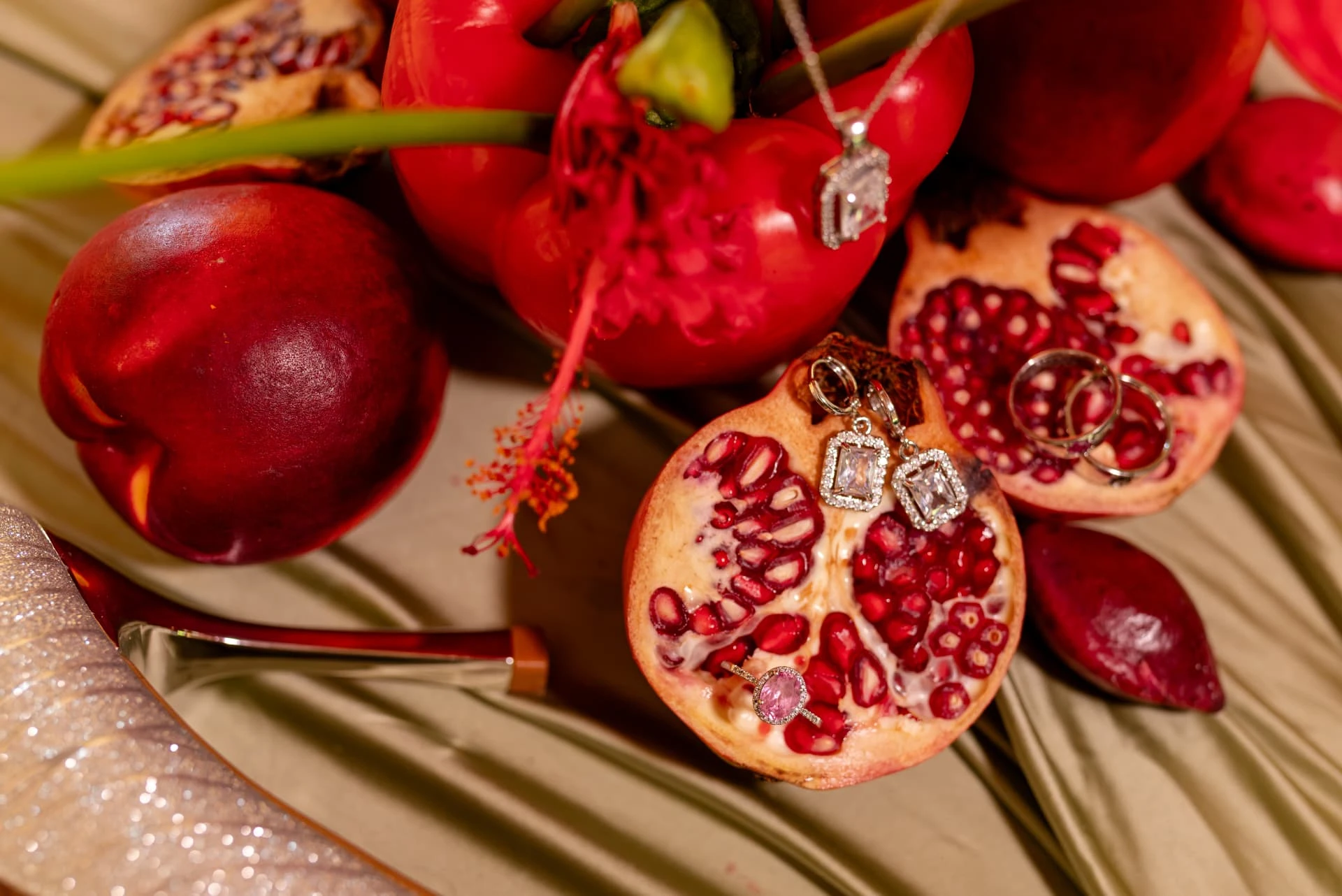
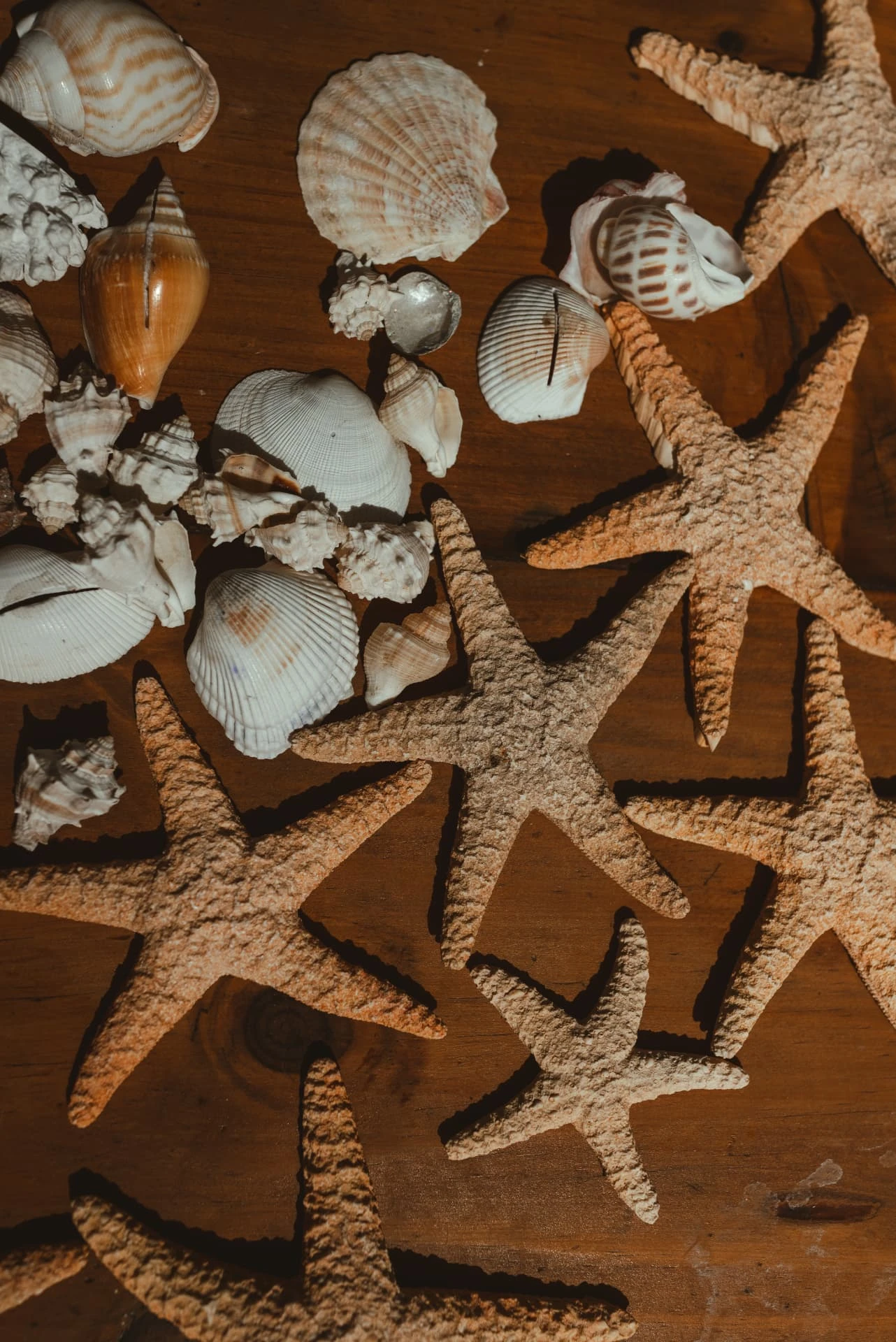
Shells and starfish connected the celebration back to the Caribbean. Fruit appeared alongside the bride’s shoes. Jewellery was photographed with pomegranate — turning the getting-ready details into another tiny still life.
The textures, tableware, tropical materials and personal objects became pieces of the same visual story rather than disconnected wedding details.
Nothing should feel like it accidentally wandered in from another wedding.
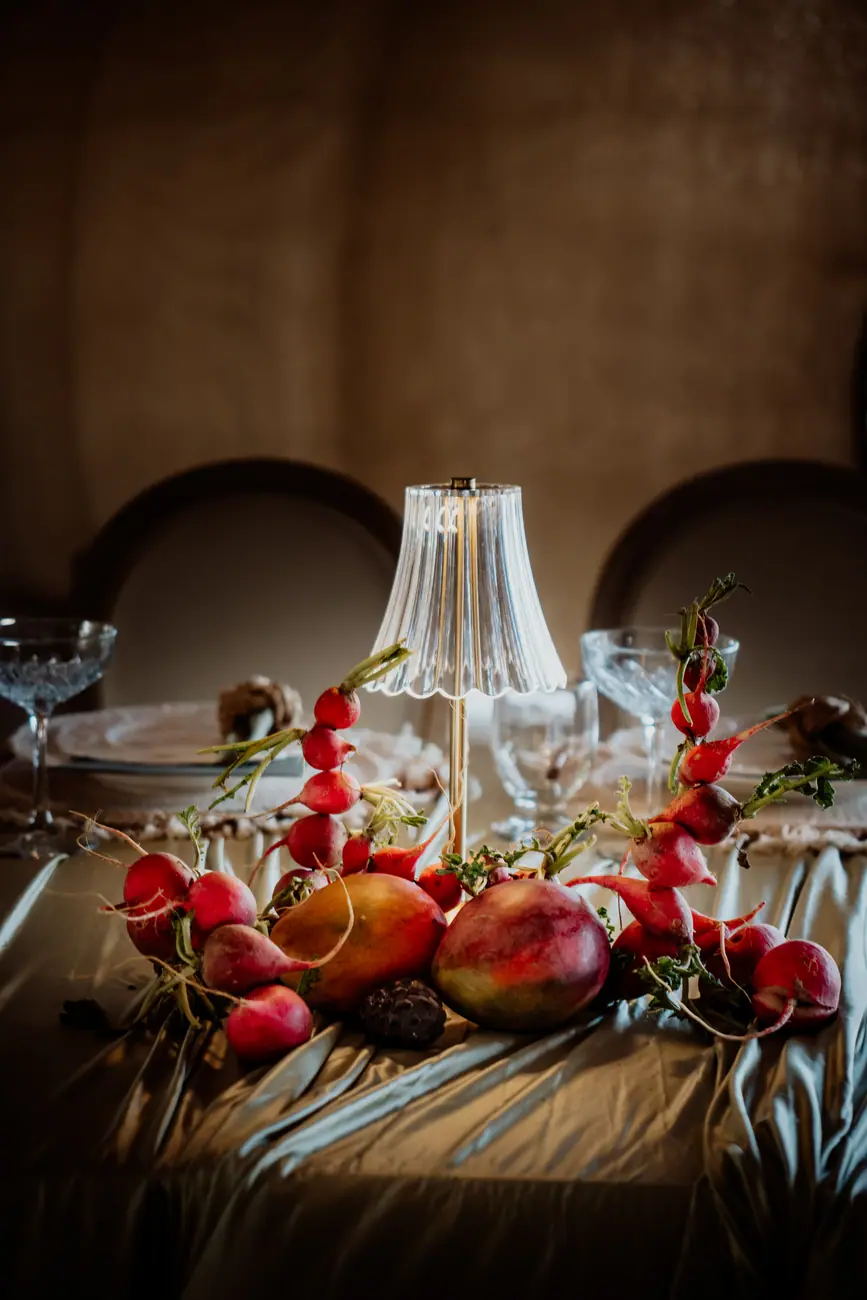 Still life, reception table
Radishes, mango and rambutan, lit low. The getting-ready details and the dinner table were built from the same instinct: arrange a few real things carefully, and let the light do the rest.
Designing for someone
you grew up with.
There is a strange tenderness in designing the wedding of someone you knew long before weddings were even a thought. Before the fiancé. Before the dress. Before the venue. Before any of us really knew what adulthood was supposed to look like.
I knew Irma in middle school.
And years later, I had the privilege of watching her sit across from Hiram at a table I designed for them, surrounded by their families, their friends and so many little pieces of who they are.
There was Japan. There was Mexico. There was the Caribbean. There were their dogs. There was Studio Ghibli. There were flowers and fruit and fabrics and traditions and memories.
Somehow, none of it felt like too much. Because it all belonged to them.
That is the difference between decorating a wedding and designing one.
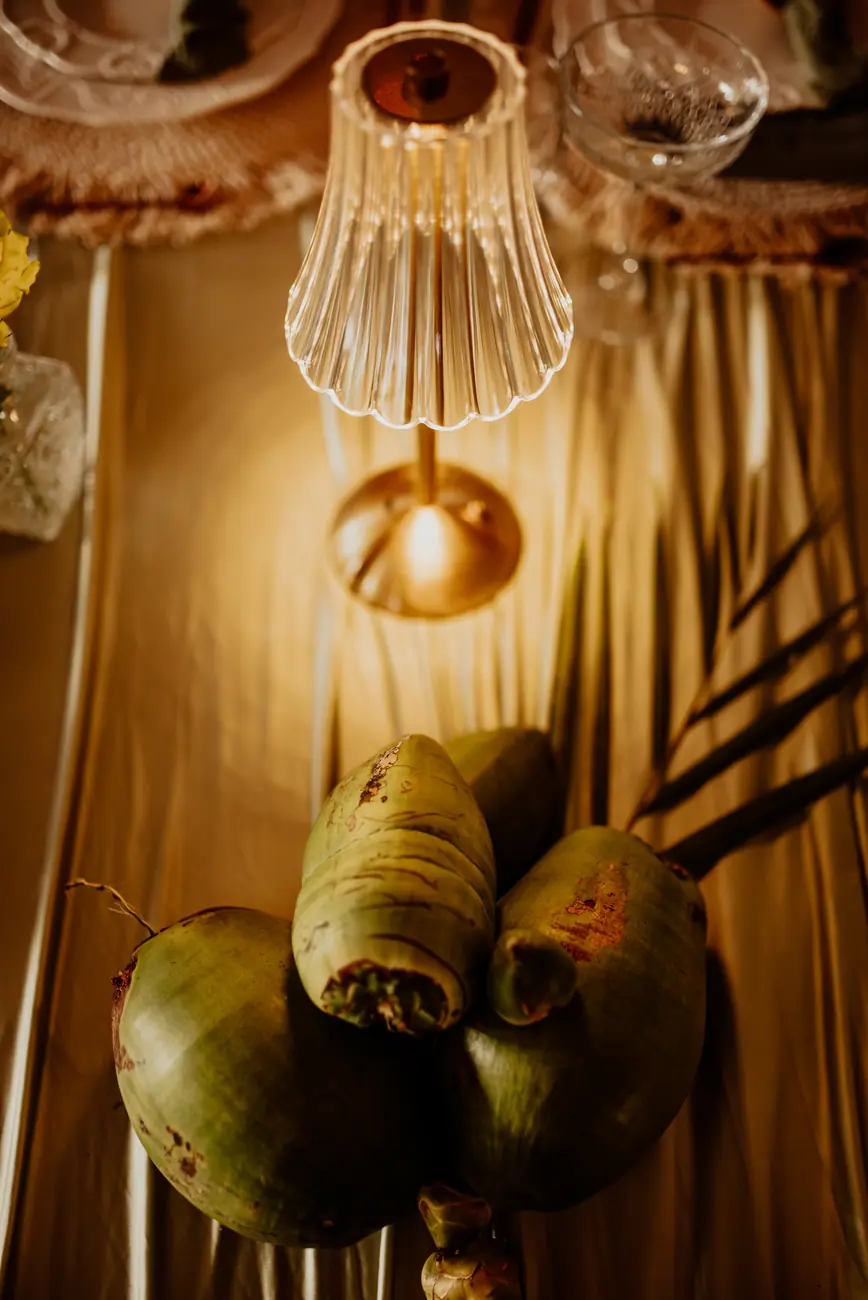
“Decoration makes a space beautiful. Design gives beauty a reason to exist.”
When I looked around that table and saw everyone actually looking at one another, talking, laughing and sharing the same moment, I realised we had achieved exactly what I wanted.
We had not simply created a beautiful wedding. We had created a tiny world that could only belong to Irma & Hiram.
And for my middle school friend, I cannot imagine a sweeter beginning.
Want a wedding that feels unmistakably yours?
We design destination weddings around people, not formulas. Tell us your story, your weird little references, your favourite places and the things you love — we’ll turn them into a celebration that feels like you.